
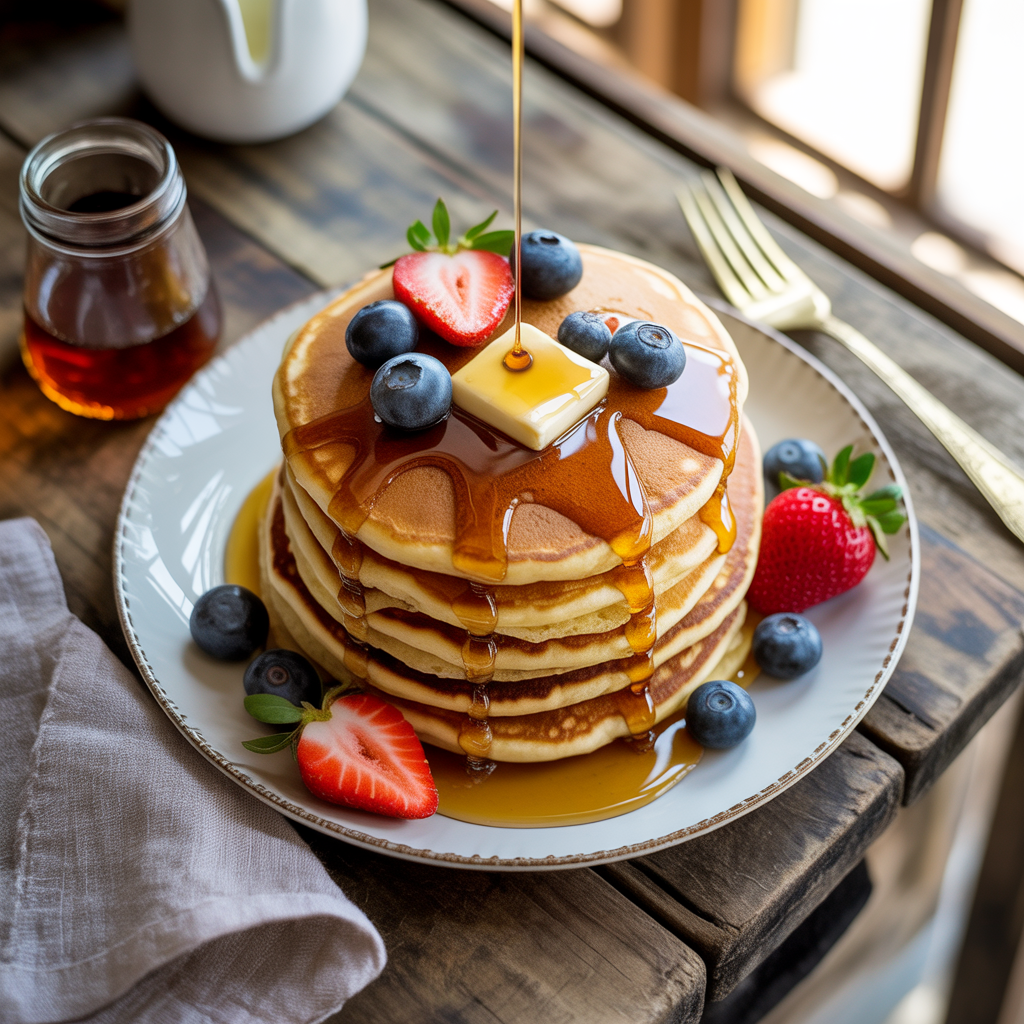
There’s nothing quite like a stack of warm, fluffy pancakes to start your morning right. Whether you’re making breakfast for the family or treating yourself on a lazy weekend, homemade pancakes from scratch are surprisingly simple and infinitely better than anything from a box. In this guide, you’ll learn everything you need to know — from the science behind fluffy pancakes to step-by-step instructions and expert tips.
Why Make Pancakes From Scratch?
Store-bought pancake mixes are convenient, but they often contain preservatives, artificial flavors, and excess sodium. When you make pancakes from scratch, you control every ingredient. The result? A fresher taste, fluffier texture, and the satisfaction of knowing exactly what’s in your food. Plus, most of the ingredients are pantry staples you already have at home.
What Makes Pancakes Fluffy?
Before diving into the recipe, it helps to understand the science behind fluffy pancakes:
- Baking powder: This leavening agent creates carbon dioxide bubbles when it reacts with moisture and heat, causing the batter to rise and become airy.
- Buttermilk or acidic ingredients: The acid in buttermilk reacts with baking soda to create even more lift. It also tenderizes the gluten in flour, resulting in a softer texture.
- Not overmixing: Overmixing develops gluten strands, which makes pancakes tough and dense. A few lumps in the batter are perfectly fine — even desirable.
- Resting the batter: Letting the batter rest for 5–10 minutes allows the gluten to relax and the leavening agents to activate, producing a lighter pancake.
- Room temperature ingredients: Cold eggs and milk can cause the batter to be uneven. Room temperature ingredients blend more smoothly.
Ingredients You’ll Need
This recipe makes approximately 8–10 medium pancakes (serves 2–3 people).
- 1 ½ cups (190g) all-purpose flour
- 2 tablespoons granulated sugar
- 1 tablespoon baking powder
- ½ teaspoon baking soda
- ½ teaspoon salt
- 1 ¼ cups (300ml) buttermilk (or see substitution below)
- 1 large egg, at room temperature
- 2 tablespoons unsalted butter, melted (plus more for the pan)
- 1 teaspoon pure vanilla extract
Buttermilk Substitution
If you don’t have buttermilk on hand, you can make a quick substitute: add 1 tablespoon of white vinegar or lemon juice to a measuring cup, then fill it up to 1 ¼ cups with regular whole milk. Stir gently and let it sit for 5 minutes until it curdles slightly. This mimics the acidity of buttermilk perfectly.
Equipment You’ll Need
- Two mixing bowls (one large, one medium)
- A whisk
- A rubber spatula or wooden spoon
- A non-stick skillet or griddle
- A ladle or ¼-cup measuring cup for portioning batter
- A wide, flat spatula for flipping
Step-by-Step Instructions
Step 1: Mix the Dry Ingredients
In a large mixing bowl, whisk together the flour, sugar, baking powder, baking soda, and salt. Make sure everything is evenly distributed. Creating a uniform dry mixture ensures consistent rise throughout each pancake.
Step 2: Mix the Wet Ingredients
In a separate medium bowl, whisk together the buttermilk, egg, melted butter, and vanilla extract until well combined. Make sure your melted butter isn’t too hot — let it cool slightly so it doesn’t scramble the egg.
Step 3: Combine Wet and Dry Ingredients
Pour the wet ingredients into the bowl with the dry ingredients. Using a rubber spatula or wooden spoon, gently fold the mixture together until just combined. It’s okay — even important — to leave some lumps. Do not use a whisk at this stage and do not overmix. The batter should look thick and slightly lumpy.
Step 4: Let the Batter Rest
Cover the bowl loosely with a clean kitchen towel or plastic wrap and let the batter rest for 5 to 10 minutes. During this time, the baking powder will begin to activate and you may notice the batter becoming slightly bubbly. Do not stir the batter again after this point.
Step 5: Heat the Pan
Place a non-stick skillet or griddle over medium-low to medium heat. This is crucial — too high a heat will burn the outside of the pancakes before the inside cooks through. Let the pan heat for about 2–3 minutes. Add a small knob of butter (about ½ teaspoon) and let it melt, swirling it around the pan.
Pro tip: To test if your pan is at the right temperature, sprinkle a few drops of water onto the surface. If they sizzle and evaporate immediately, the pan is ready.
Step 6: Cook the Pancakes
Using a ladle or ¼-cup measuring cup, pour the batter onto the pan. Leave enough space between pancakes if cooking multiple at once. Cook the first side until you see:
- Bubbles forming on the surface of the batter
- The edges looking set and no longer wet
- A light golden color on the bottom (lift a corner gently to check)
This typically takes about 2 to 3 minutes. Do not press down on the pancakes with the spatula — this deflates them.
Step 7: Flip and Finish Cooking
Using a wide spatula, flip each pancake in one confident motion. Cook for another 1 to 2 minutes on the second side. The second side cooks faster than the first. Remove from the pan and place on a plate. Repeat with the remaining batter, adding a little more butter between each batch as needed.
Step 8: Serve Immediately
Pancakes are best enjoyed fresh off the griddle. Stack them up, add your favorite toppings, and serve right away.
Topping Ideas
The beauty of homemade pancakes is how versatile they are. Here are some delicious topping ideas:
- Classic: Maple syrup and salted butter
- Fresh fruit: Sliced strawberries, blueberries, or bananas
- Whipped cream: A dollop of fresh whipped cream on top
- Peanut butter and honey: A protein-packed combination
- Chocolate chips: Add them directly to the batter before cooking
- Lemon and powdered sugar: A simple, elegant option
- Nutella and hazelnuts: For an indulgent treat
- Greek yogurt and granola: A healthier twist
Add-Ins to Customize Your Pancakes
You can add mix-ins directly to the batter after it has rested. Fold them in gently to avoid deflating the batter:
- Blueberries (fresh or frozen)
- Chocolate chips
- Chopped pecans or walnuts
- Sliced bananas
- Shredded coconut
- Cinnamon and nutmeg (add to dry ingredients)
- Lemon zest
Tips for Perfect Pancakes Every Time
- Use a kitchen scale: Measuring flour by weight (rather than volume) gives you more consistent results. Spoon the flour into the cup and level it off — don’t scoop directly from the bag, as this packs the flour down.
- Keep pancakes warm: If making a large batch, place cooked pancakes on a baking sheet in an oven set to 200°F (93°C) to keep them warm while you finish cooking the rest.
- Don’t skip the resting time: Even 5 minutes makes a noticeable difference in texture.
- Use medium-low heat: Patience is key. Low and slow gives you even browning and a fully cooked center.
- Use a cast iron skillet or griddle: These distribute heat more evenly than thin non-stick pans, giving you a more consistent result.
- Only flip once: Flipping multiple times toughens pancakes. Flip once, cook briefly, and serve.
How to Store and Reheat Leftover Pancakes
Storing
Allow pancakes to cool completely before storing. Stack them with a small piece of parchment or wax paper between each one to prevent sticking. Store in an airtight container in the refrigerator for up to 3 days.
Freezing
Pancakes freeze beautifully! Place them in a single layer on a baking sheet and freeze for 1 hour, then transfer to a zip-lock freezer bag. They’ll keep for up to 2 months. This is a great way to meal prep breakfast for the week.
Reheating
- Toaster: The best method for crispy edges — pop them in just like toast.
- Microwave: Place 2–3 pancakes on a plate, cover with a damp paper towel, and microwave for 30–60 seconds.
- Oven: Arrange on a baking sheet and heat at 350°F (175°C) for about 5–6 minutes.
- Skillet: Reheat over medium-low heat for 1–2 minutes per side.
Common Pancake Mistakes and How to Avoid Them
| Mistake | Result | Solution |
|---|---|---|
| Overmixing the batter | Tough, rubbery pancakes | Stir until just combined; lumps are fine |
| Pan too hot | Burnt outside, raw inside | Use medium-low heat and preheat properly |
| Not resting the batter | Flat, dense pancakes | Rest for at least 5 minutes after mixing |
| Skipping buttermilk | Less tangy, less fluffy | Use buttermilk or a DIY substitute |
| Flipping too early | Batter runs and pancakes fall apart | Wait for bubbles and set edges before flipping |
| Pressing down with spatula | Flat, deflated pancakes | Never press — let them puff naturally |
Frequently Asked Questions (FAQ)
Can I make the batter the night before?
Yes, but with a caveat. You can mix the dry ingredients and wet ingredients separately and store them in the fridge overnight. Combine them the next morning before cooking. Fully mixed batter can be stored overnight, but the leavening power will diminish slightly, resulting in slightly less fluffy pancakes.
Can I make these pancakes dairy-free?
Absolutely. Substitute buttermilk with a plant-based milk (like almond or oat milk) combined with 1 tablespoon of apple cider vinegar. Use melted coconut oil or vegan butter in place of dairy butter.
Can I make gluten-free pancakes with this recipe?
Yes! Substitute the all-purpose flour with a 1:1 gluten-free baking flour blend. The results are very similar, though the texture may be slightly more delicate. Let the batter rest a bit longer — about 10 minutes.
Why are my pancakes not fluffy?
The most common causes are: overmixing the batter, not letting it rest, using expired baking powder, or cooking on too high of heat. Check all of these factors if your pancakes aren’t rising properly.
How do I know when to flip the pancake?
Look for bubbles forming on the surface that begin to pop without filling back in, and check that the edges look dry and set. The bottom should be golden brown when you lift a corner slightly.
Can I double this recipe?
Yes, this recipe scales up easily. Simply double all the ingredients. Use two pans simultaneously or work in batches, keeping finished pancakes warm in the oven.
Nutrition Information (Approximate per pancake)
- Calories: 120 kcal
- Carbohydrates: 18g
- Protein: 4g
- Fat: 4g
- Saturated Fat: 2g
- Sodium: 210mg
- Sugar: 3g
Nutritional values are estimates and may vary depending on specific ingredients used.
Final Thoughts
Making fluffy pancakes from scratch is one of those simple kitchen skills that pays off in a big way. With just a handful of pantry ingredients, the right technique, and a bit of patience, you can produce restaurant-quality pancakes right in your own kitchen. The key takeaways are simple: don’t overmix, let the batter rest, use buttermilk, and cook on medium-low heat. Master these basics and you’ll never need a pancake mix again.
Now go ahead — heat up that skillet and make yourself a stack worth waking up for.